Why Negative Keywords Are a Waste of Time for Ecommerce Advertisers (And What to Do Instead)
I'm about to say something that might make you uncomfortable: negative keywords are either a complete waste of your time, or they're actively harming your campaigns. I know. Every Google Ads "best practice" guide tells
https://www.youtube.com/watch?v=IG9YkDaV3LE

I'm about to say something that might make you uncomfortable: negative keywords are either a complete waste of your time, or they're actively harming your campaigns.
I know. Every Google Ads "best practice" guide tells you to review your search terms and add negative keywords religiously. But after 12 years running my Google Ads agency Big Flare, spending millions per year on ecommerce ads, and generating more than $150 million in revenue for my clients, I've arrived at a very different conclusion.
Let me break it down.
The Two Problems With Negative Keywords
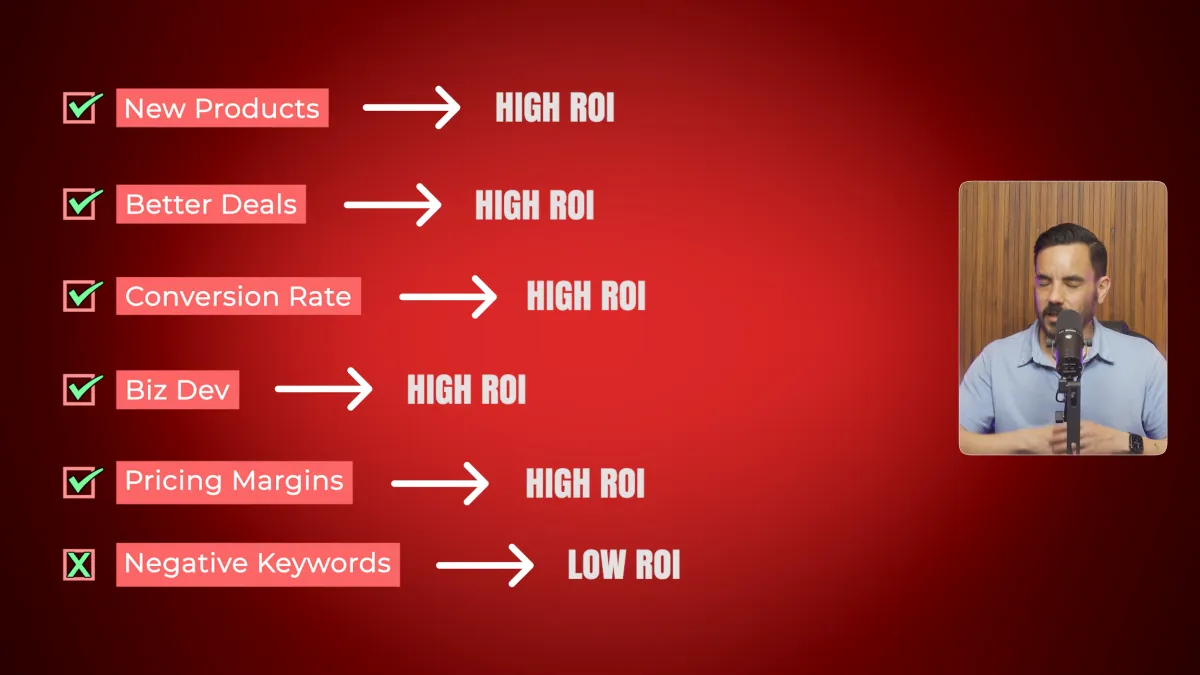
If you're an ecommerce business owner or operator, there are really only two likely outcomes when it comes to negative keywords. And neither of them is good.
Best Case: You're Wasting Your Time
At best, adding negative keywords might help your performance a tiny bit. Maybe. But the opportunity cost is massive. Every hour you spend trawling through search term reports is an hour you're not spending on high-leverage activities like launching new profitable products, negotiating better supplier deals, improving your conversion rate, strategic planning, or optimising your pricing and margins.
These are the activities that actually move the needle in your business. Negative keywords deliver minimal ROI compared to any of them.
If you have an agency or team member handling your Google Ads, sure, they can add some negative keywords sparingly. But even then, it should still be low priority compared to other optimisations.
Worst Case: You're Actively Hurting Your Account
Here's where it truly becomes a problem. The worst case scenario with negative keywords is that you're not just wasting your time; you're actually harming your account by blocking profitable traffic.
Human intuition is often completely wrong about search behaviour. What seems like an obviously bad keyword can actually be making you money. And when you add it as a negative, you're throwing that profit away.
The Microsoft Office Example: Why Human Intuition Fails
I had a client selling Microsoft Office software licences. They kept seeing keywords containing "free" in their search terms report: "free Microsoft Office download," "free MS Office," "Microsoft Office free version," and so on.
Their immediate reaction? "We need to add 'free' as a negative keyword. These people are cheapskates. They're never going to buy from us." A perfectly logical assumption, right?
But I advised against it. I said let's run with it and see what the data tells us. And those "free" keywords delivered strong positive ROAS. Those supposedly worthless "free" searchers were actually converting into paying customers.
Why This Works
Search behaviour is far more complex than our snap judgements can account for. Users searching for "free Microsoft Office" might be testing whether legitimate free options exist, hoping for a trial version, or simply curious. When they discover that the free sources are scammy, low-quality, or come with security risks, they come back and buy the legitimate paid version.
Snap judgements based on intuition are often completely wrong. What seems "obviously" bad can actually be incredibly profitable.
Google's Algorithm Is Really, Really Good
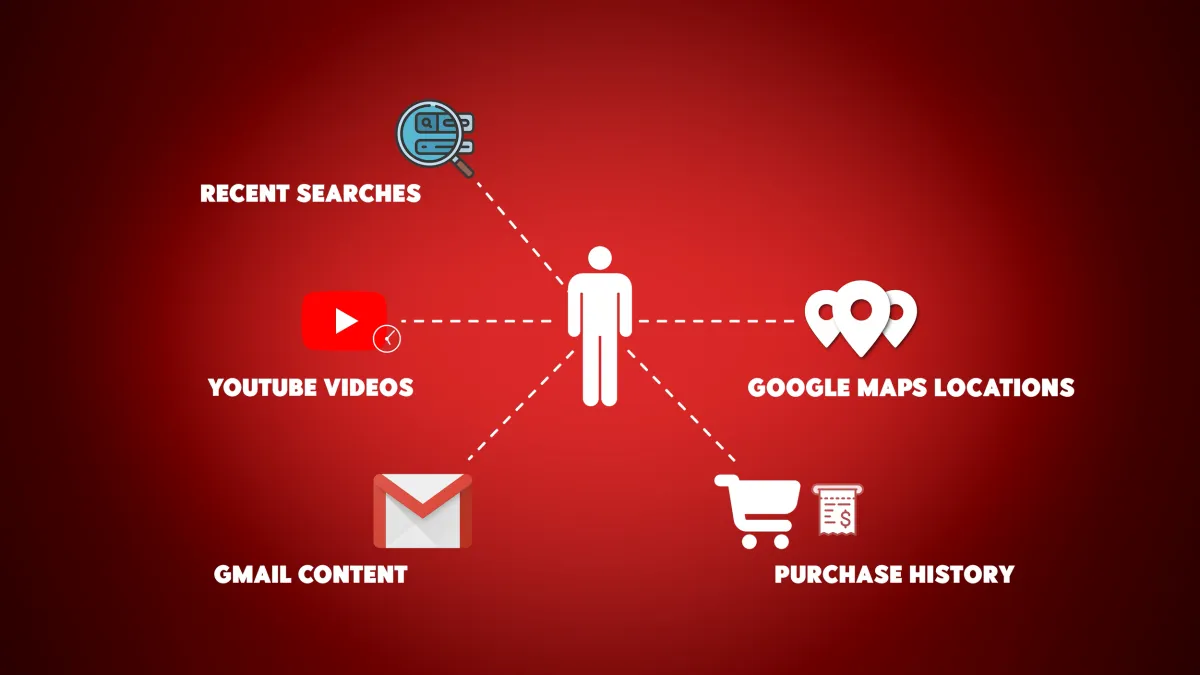
Here's the thing most people don't fully appreciate. Google's algorithm is really, really good at this. Like, scary good.
Google has access to an enormous amount of behavioural data on every user: their recent searches, YouTube watch history, Gmail content, purchase history from Gmail receipts, Google Maps locations, and much more. This is just the tip of the iceberg.
How Smart Bidding Uses This Data
Using that "free MS Office" search as an example, say 10,000 people search for this term every month. Let's say there are two user types within this audience: cheapskates and high flyers.
The cheapskates regularly download free software from dodgy sites, subscribe to money-saving newsletters, and watch budgeting life hack videos. The high flyers have a history of paying for premium software, fly business class, live in affluent neighbourhoods, and watch productivity content on YouTube.
Google can discern these two completely different user types within that overall audience. So what does Smart Bidding do? It bids appropriately.
For the high flyers, it might bid $3 per click to reflect the higher probability of conversion. For the cheapskates, it might bid just 3 cents, or such a low bid that either you receive no traffic from that audience, or you do receive some traffic cheap enough to offset the lower conversion probability.
This makes search terms work that human intuition would tell you could never work.
There's No Such Thing as a Keyword That "Doesn't Work"
Something I like to say is there's no such thing as a keyword that "doesn't work." Imagine you're selling men's wallets and somehow match to the keyword "funny cat videos." Seems hopeless, right? But now imagine you received 1 billion clicks and only paid $1 total. Would this keyword "work"? Absolutely. Somewhere in those 1 billion people, a few are looking for wallets right now, and at that cost per click, even a tiny conversion rate becomes profitable.
It's not that keywords "work" or "don't work." That's the wrong framing entirely. Different keywords have different conversion probabilities. Less relevant keywords equal lower conversion probability. But if you bid low enough, they can still be profitable. This is exactly what Smart Bidding excels at: constantly estimating conversion probability for each individual user, then bidding the correct amount.
When you add a negative keyword, you completely block Google's ability to identify the small percentage of high-intent users within that audience. You throw away potential profit because you've decided a keyword "doesn't work," but Google might have been able to make it work.
When Negative Keywords Actually DO Matter
Everything I've just said comes with some critical assumptions. This recommendation assumes:
You're using Smart Bidding strategies (Target ROAS, Target CPA, Maximise Conversions, or Maximise Conversion Value)
You have good conversion volume, ideally 50 to 100+ conversions per month
You're tracking actual purchases or revenue as your conversion goal
You're running ecommerce with direct online transactions where Google Ads can see the final purchase conversion data
If all of these apply to you, then negative keywords have very low value, and your time is almost certainly better spent elsewhere.
But what if they don't all apply? There are two main situations where negative keywords do become valuable.
Exception 1: Low Conversion Volume
If you're receiving fewer than 50 conversions per month, there may not be enough data for machine learning to work effectively. Smart Bidding can't optimise properly without sufficient conversion signals. In this scenario, manual intervention becomes more important, and negative keywords can help filter out obviously irrelevant traffic when the algorithm doesn't have enough data to do it automatically.
Exception 2: Google Can't See Your Final Conversion Data
When Google can't see your final conversion data, the actual purchases or money coming in, manual filtering becomes more important. This happens in a few common scenarios:
Lead generation: Whether you're a service business generating form-fill leads or a software business generating demos and free trials, Google can't see which leads actually close into paying customers. The algorithm can't optimise for final business value because that conversion happens offline, often weeks or months later.
B2B: Smaller volumes, higher-value customers, and long sales cycles with offline closing. Even if you import final purchase conversions into Google, that data is often far less accurate than tracking an immediate website purchase.
In these scenarios, negative keywords become more valuable precisely because Google's algorithm doesn't have the data it needs to make smart bidding decisions.
What You Should Do Next
If you're an ecommerce business owner or operator with 50-100+ conversions per month and you're tracking purchases properly, negative keywords have very low value for you. Don't waste your valuable time on this activity. Focus on high-leverage business activities instead. Let Google's algorithm do what it's designed to do.
If you have someone else managing your Google Ads, they can add negative keywords, but sparingly. Their decisions should be backed by data, not assumptions. Keep it minimal and strategic, and remember there are still many other optimisations in Google Ads that deliver way higher value than negative keywords.
And of course, all this advice does not apply quite so much if you have very low conversion volume, if you're generating leads, or if you are in a niche B2B vertical.
Conclusion
The conventional wisdom around negative keywords is wrong for most ecommerce advertisers. When you break it down, there are only two outcomes from spending time on negatives: best case, you're wasting time on a low-value activity; worst case, you're actively blocking profitable traffic. Google's algorithm has access to enormous behavioural data on every user and can segment audiences within the same search term far better than human intuition ever could. Smart Bidding adjusts bids per user based on conversion probability, making even seemingly "bad" keywords profitable. The exceptions are when you have low conversion volume (under 50 per month), or when Google can't see your final conversion data, such as lead generation or B2B. For everyone else, your time is better spent on high-leverage activities like launching new products, improving conversion rates, and optimising your pricing and margins.
More Articles
All ArticlesMeta Ads vs Google Ads for Ecommerce: The Demand Generation vs Demand Capture Framework
If you're trying to decide whether to put your ecommerce advertising budget into Meta Ads or Google Ads, I need you to understand something first. This isn't just a platform choice. This is a strategic decision that
How to Fix Failing Google Ads for Ecommerce: The PMax Feed-Only Strategy for Beauty and Cosmetics Brands
I recently had a consulting call with a beauty and cosmetics ecommerce brand, and the conversation was so packed with lessons that I wanted to share the key takeaways with you. Because frankly, the mistakes they were